Data Governance Best Practices for US E-commerce in 2025

Implementing robust e-commerce data governance best practices for US e-commerce in 2025 is crucial for ensuring regulatory compliance, enhancing data utility, and driving a significant 5% reduction in operational costs.
In the rapidly evolving landscape of digital commerce, the effective management of data is no longer just an advantage—it’s a necessity. For US e-commerce businesses, navigating the complexities of data privacy regulations while simultaneously striving for operational efficiency presents a unique challenge. This article delves into the critical role of Data Governance Best Practices for US E-commerce in 2025: Ensuring Compliance and Maximizing Data Utility for a 5% Reduction in Operational Costs, offering a comprehensive guide to building a resilient and profitable data strategy.
Understanding the Evolving Data Landscape in US E-commerce
The digital economy thrives on data, and for US e-commerce, this means a constant influx of customer information, transaction details, and behavioral insights. However, this wealth of data comes with significant responsibilities. The regulatory environment is becoming increasingly stringent, with laws like CCPA and emerging federal data privacy frameworks demanding meticulous data handling.
Businesses that fail to adapt risk not only hefty fines but also a severe blow to their brand reputation. Beyond compliance, effective data governance unlocks substantial operational benefits, from streamlined processes to enhanced decision-making. Ignoring these shifts is no longer an option; proactive engagement is key to survival and growth.
The Impact of Regulatory Changes
US e-commerce businesses face a patchwork of state-level data privacy laws, with the potential for federal legislation in the near future. This necessitates a flexible and adaptable data governance framework.
- CCPA/CPRA: Mandating consumer rights regarding personal information, requiring transparent data collection and usage.
- Sector-Specific Regulations: Industries like healthcare (HIPAA) or finance have additional data protection requirements that can impact e-commerce operations.
- Emerging Federal Standards: Anticipating and preparing for potential nationwide data privacy laws is crucial for long-term stability.
Understanding and integrating these legal requirements into data governance policies is paramount. It’s not merely about avoiding penalties but about building trust with customers who are increasingly aware of their data rights. This proactive approach can lead to a more secure and reputable brand.
Establishing a Robust Data Governance Framework
A well-defined data governance framework is the bedrock of any successful data strategy. For US e-commerce, this involves creating clear policies, processes, and roles that dictate how data is collected, stored, processed, and utilized. The goal is to ensure data quality, security, and compliance across all operations.
Without a strong framework, data can become siloed, inconsistent, and unreliable, leading to poor business decisions and increased operational costs. By contrast, a structured approach enables seamless data flow, improves data accuracy, and fosters a culture of data responsibility within the organization. This foundational work is essential for achieving the targeted 5% reduction in operational costs by 2025.
Key Components of a Data Governance Framework
Developing an effective framework requires attention to several critical areas, each contributing to the overall integrity and utility of data.
- Data Stewardship: Assigning clear ownership and accountability for data assets across different departments.
- Data Quality Management: Implementing processes to ensure data accuracy, completeness, and consistency.
- Data Security and Privacy: Establishing robust controls to protect sensitive information from unauthorized access or breaches.
- Data Lifecycle Management: Defining policies for data creation, usage, retention, and eventual archival or destruction.
These components work in concert to create a comprehensive system that governs every aspect of data handling. The success of this framework hinges on continuous monitoring and adaptation to new challenges and opportunities. A strong framework ensures that data serves as an asset, not a liability, for e-commerce businesses.
Implementing Data Quality and Master Data Management
High-quality data is the lifeblood of effective e-commerce operations. Poor data quality can lead to inaccurate analytics, flawed marketing campaigns, and inefficient customer service, all contributing to increased operational costs. Implementing robust data quality initiatives and Master Data Management (MDM) is therefore non-negotiable for US e-commerce businesses aiming for efficiency and compliance.
MDM ensures that a single, consistent version of critical business data—such as customer information, product catalogs, and supplier details—is maintained across all systems. This eliminates discrepancies, reduces errors, and provides a unified view of the business, directly supporting the goal of a 5% reduction in operational costs. Investing in these areas yields significant returns in accuracy and operational fluidity.
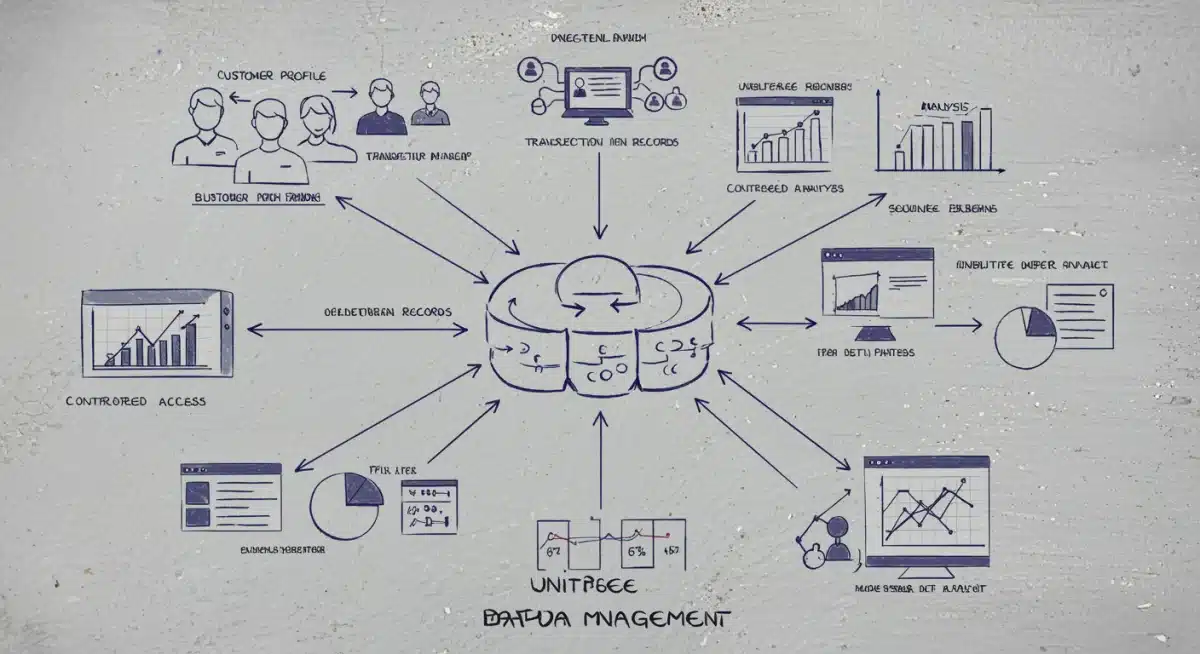
Unified data management and integration for e-commerce is essential for creating a cohesive and accurate view of all business operations. When data from different sources is harmonized, it becomes more reliable and valuable, enabling better strategic decisions and smoother operational execution.
Strategies for Data Quality Improvement
Achieving and maintaining high data quality is an ongoing process that requires dedicated effort and the right tools. It involves a combination of preventative measures and reactive corrections.
- Data Profiling: Analyzing data to discover its structure, content, and quality, identifying anomalies and inconsistencies.
- Data Cleansing: Correcting or removing incorrect, incomplete, or duplicate data from datasets.
- Data Validation: Implementing rules and checks at the point of data entry to prevent errors from entering the system.
- Regular Audits: Conducting periodic reviews of data to ensure continued adherence to quality standards.
By focusing on these strategies, e-commerce businesses can significantly improve the reliability of their data, leading to more accurate reporting, better customer experiences, and ultimately, reduced operational expenses. This commitment to data quality underpins all other data governance efforts and drives tangible business outcomes.
Leveraging Data Analytics for Operational Efficiency
Beyond compliance, the true power of data governance lies in its ability to unlock actionable insights through sophisticated data analytics. For US e-commerce, this means transforming raw data into strategic intelligence that can drive operational efficiency and cost reductions. By analyzing customer behavior, supply chain performance, and marketing effectiveness, businesses can pinpoint areas for improvement and optimize resource allocation.
A well-governed data environment ensures that the data fed into analytics tools is clean, consistent, and reliable, leading to more accurate predictions and informed decisions. This analytical prowess is a direct pathway to achieving the ambitious target of a 5% reduction in operational costs by 2025, allowing businesses to operate leaner and smarter. It’s about turning data into a competitive advantage.
Applications of Data Analytics in E-commerce
Data analytics offers a myriad of opportunities for enhancing operational efficiency across various facets of an e-commerce business.
- Inventory Optimization: Predicting demand more accurately to reduce overstocking and stockouts, minimizing carrying costs.
- Personalized Marketing: Tailoring campaigns to individual customer preferences, increasing conversion rates and reducing wasted ad spend.
- Supply Chain Management: Identifying bottlenecks and inefficiencies in logistics, leading to faster delivery and lower shipping costs.
- Customer Service Enhancement: Analyzing customer interactions to identify common issues and improve resolution times, boosting satisfaction and reducing support costs.
The strategic application of data analytics, underpinned by strong data governance, empowers e-commerce businesses to make data-driven decisions that directly impact their bottom line. This continuous cycle of analysis and optimization is crucial for sustained growth and profitability in a competitive market.
Ensuring Data Security and Privacy Compliance
In the age of frequent data breaches and heightened privacy concerns, securing customer data is paramount for US e-commerce. A single security incident can erode customer trust, incur massive fines, and severely damage a brand’s reputation. Data governance must therefore place a strong emphasis on robust security measures and strict adherence to privacy regulations, not just as a legal requirement but as a fundamental ethical obligation.
Implementing comprehensive security protocols and privacy-by-design principles throughout the data lifecycle ensures that personal and sensitive information is protected at every stage. This commitment to security and privacy is a key differentiator in the market, fostering customer loyalty and minimizing the financial risks associated with non-compliance. It’s an investment in the long-term viability of the business.
Key Security and Privacy Measures
Protecting data effectively requires a multi-layered approach, combining technological solutions with organizational policies and employee training.
- Encryption: Encrypting data both in transit and at rest to prevent unauthorized access.
- Access Controls: Implementing strict role-based access to data, ensuring only authorized personnel can view or modify sensitive information.
- Regular Security Audits: Conducting periodic vulnerability assessments and penetration testing to identify and address potential weaknesses.
- Employee Training: Educating staff on data privacy policies, security best practices, and the risks of phishing or social engineering attacks.
By prioritizing these security and privacy measures, e-commerce businesses can build a resilient defense against cyber threats and maintain regulatory compliance. This proactive stance not only protects valuable data but also reinforces customer trust, which is invaluable in the digital marketplace.
Measuring Impact and Continuous Improvement
The journey of data governance is not a one-time project but an ongoing process of measurement, evaluation, and continuous improvement. For US e-commerce businesses aiming for a 5% reduction in operational costs by 2025, it’s vital to establish clear metrics to track the effectiveness of data governance initiatives. This involves monitoring key performance indicators (KPIs) related to data quality, compliance, and operational efficiency.
Regularly assessing the impact of implemented policies and technologies allows businesses to identify areas for refinement and adapt to new challenges. This iterative approach ensures that data governance remains aligned with evolving business needs and regulatory landscapes, maximizing its long-term benefits and sustaining cost reduction efforts. It’s about fostering a culture of continuous optimization.
Key Performance Indicators for Data Governance
To effectively measure the impact of data governance, businesses should track a range of KPIs that reflect both compliance and operational efficiency.
- Data Quality Score: Measuring the accuracy, completeness, and consistency of critical data sets.
- Compliance Audit Results: Tracking the outcomes of internal and external audits to ensure adherence to regulations.
- Data Breach Incidents: Monitoring the number and severity of security incidents to assess the effectiveness of security measures.
- Operational Cost Savings: Quantifying the financial benefits directly attributable to improved data management and analytics.
By meticulously tracking these KPIs, e-commerce businesses can demonstrate the tangible value of their data governance efforts. This data-driven approach to data governance itself reinforces the principles of effective data management, creating a virtuous cycle of improvement and sustained operational excellence.
| Key Practice | Benefit for US E-commerce |
|---|---|
| Robust Data Governance Framework | Ensures systematic data handling, enhances compliance, and reduces risks. |
| High Data Quality & MDM | Improves accuracy for analytics and operations, leading to better decisions. |
| Advanced Data Analytics | Drives operational efficiency, optimizes resource allocation, and identifies cost savings. |
| Data Security & Privacy | Protects sensitive data, builds customer trust, and ensures regulatory adherence. |
Frequently Asked Questions About E-commerce Data Governance
Data governance is vital due to stricter data privacy regulations like CCPA, increasing cyber threats, and the need for data-driven decision-making. Effective governance ensures compliance, builds customer trust, and optimizes operations to reduce costs and gain a competitive edge.
By improving data quality, reducing errors, and enabling more accurate analytics, data governance streamlines processes like inventory management, marketing, and customer service. This efficiency leads to less waste, better resource allocation, and direct cost savings, contributing to the 5% target.
The primary challenges include navigating varied state-specific privacy laws, adapting to potential federal regulations, managing consent effectively, and ensuring secure data handling across all third-party integrations. Continuous monitoring and a flexible framework are essential.
MDM ensures a single, accurate, and consistent view of critical business data (customers, products) across all systems. This eliminates data silos and inconsistencies, enhancing data quality, supporting analytics, and improving operational efficiency, which is crucial for governance.
Data governance policies should be reviewed at least annually, or more frequently if there are significant changes in regulations, business operations, or technological advancements. Regular reviews ensure policies remain relevant, effective, and aligned with strategic goals and compliance requirements.
Conclusion
For US e-commerce businesses, embracing robust data governance best practices is not merely a regulatory burden but a strategic imperative. By establishing comprehensive frameworks, prioritizing data quality, leveraging advanced analytics, and ensuring stringent security, companies can navigate the complex data landscape of 2025 with confidence. The benefits extend far beyond compliance, encompassing enhanced operational efficiency, significant cost reductions, and a fortified foundation of customer trust. Proactive investment in data governance today promises a more secure, efficient, and profitable future for e-commerce.