State Privacy Laws: 2025 E-commerce Regulatory Overview
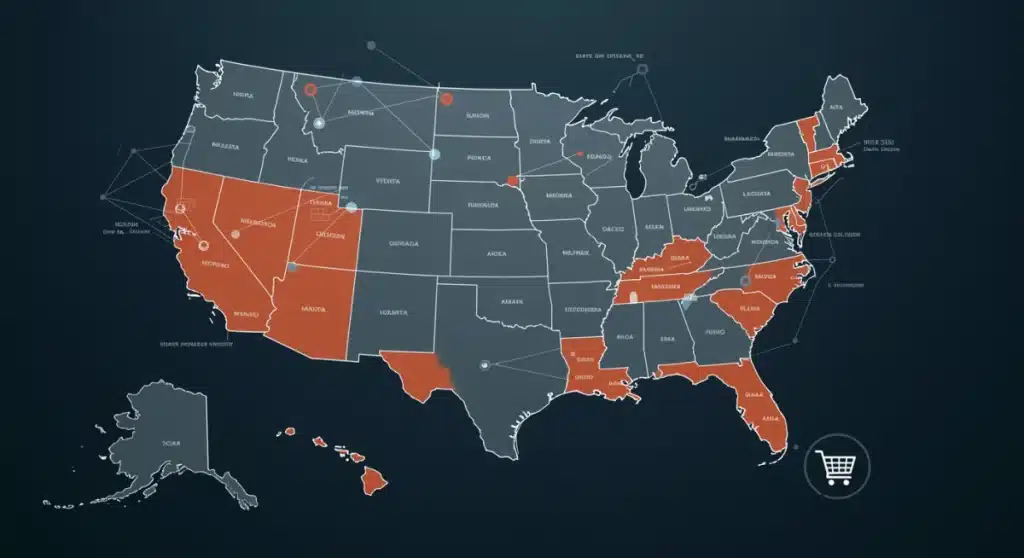
The 2025 landscape of state privacy laws beyond California presents a complex, evolving regulatory challenge for national e-commerce, demanding proactive compliance and a nuanced understanding of diverse consumer data protection requirements.
The digital marketplace continually evolves, but so do the regulations governing it. For e-commerce businesses operating across the United States, understanding the intricate web of state privacy laws has become more critical than ever, especially as we look towards 2025 and beyond. While California’s pioneering efforts often capture headlines, a growing number of states are enacting their own comprehensive data protection statutes, creating a dynamic and often challenging compliance environment.
The evolving landscape of US state privacy laws
The United States, unlike the European Union with its GDPR, lacks a single, overarching federal privacy law. This regulatory vacuum has prompted individual states to develop their own frameworks, leading to a patchwork of legislation that can be difficult for national e-commerce businesses to navigate. As of 2025, this trend continues to accelerate, with several states introducing or refining their privacy statutes.
These varied laws often share common principles, such as consumer rights to access, delete, and opt-out of the sale of their personal data. However, the nuances in definitions, thresholds, enforcement mechanisms, and specific consumer rights can create significant compliance hurdles. Businesses must move beyond a ‘one-size-fits-all’ approach and embrace a more granular strategy to meet these diverse requirements effectively.
Key drivers of new state privacy legislation
- Increased consumer awareness: Growing public concern over data breaches and misuse of personal information fuels legislative action.
- Technological advancements: The rapid evolution of data collection and processing technologies necessitates updated legal frameworks.
- California’s influence: The success and impact of CCPA and CPRA often serve as a blueprint or catalyst for other states.
- Competitive regulatory environment: States compete to offer robust consumer protections, attracting residents and fostering trust.
The continuous development of these laws underscores a fundamental shift in how personal data is viewed and protected. For e-commerce, this means a constant need for vigilance, adaptation, and investment in robust privacy programs to avoid significant penalties and reputational damage.
Beyond California: emerging privacy powerhouses
While the California Consumer Privacy Act (CCPA) and its successor, the California Privacy Rights Act (CPRA), set a high bar, other states are rapidly catching up, introducing their own robust privacy legislation. Understanding these emerging powerhouses is crucial for any e-commerce entity with a national footprint. These laws often mirror aspects of California’s framework but introduce unique provisions that demand close attention.
States like Virginia, Colorado, Utah, and Connecticut have already enacted comprehensive privacy laws, each with its own set of definitions, consumer rights, and enforcement particularities. Many more states are in various stages of proposing or passing similar legislation, indicating a clear trend towards broader data protection across the nation. Ignoring these developments is no longer an option for businesses aiming for sustained growth and consumer trust.
Virginia Consumer Data Protection Act (VCDPA)
The VCDPA, effective January 1, 2023, grants consumers rights to access, delete, and opt-out of targeted advertising and the sale of personal data. It applies to businesses that control or process personal data of at least 100,000 consumers, or 25,000 consumers and derive over 50% of gross revenue from data sales. Its scope is narrower than CPRA but still significant.
Colorado Privacy Act (CPA)
Effective July 1, 2023, the CPA is considered one of the most comprehensive state privacy laws. It provides broad consumer rights and imposes duties on controllers regarding data minimization, purpose specification, and sensitive data processing. Its applicability thresholds are similar to VCDPA but include a more expansive definition of ‘sale’ and stronger opt-out requirements.
These laws, along with others such as the Utah Consumer Privacy Act (UCPA) and the Connecticut Data Privacy Act (CTDPA), represent a growing tide of state-level regulation. E-commerce businesses must not only be aware of these laws but also understand their specific requirements, including how they define personal data, what constitutes a ‘sale,’ and the mechanisms for exercising consumer rights. The patchwork approach necessitates a dynamic and adaptable compliance strategy.
Key differences and commonalities in state privacy laws
Navigating the complex landscape of state privacy laws requires a keen eye for both their common threads and their distinct variations. While many states draw inspiration from the CCPA/CPRA, no two laws are exactly alike, creating a compliance puzzle for e-commerce businesses operating nationally. Recognizing these differences is paramount to avoiding missteps and ensuring robust data governance.
Commonalities often revolve around core consumer rights: the right to know what data is collected, the right to delete personal data, and the right to opt-out of the sale of personal data. These foundational principles provide a starting point for developing a baseline privacy program. However, the devil is in the details, and the variations can significantly impact operational procedures.
Defining ‘personal data’ and ‘sale’
- Broad vs. specific definitions: Some states have broader definitions of what constitutes ‘personal data,’ encompassing various identifiers, while others are more prescriptive.
- Monetary exchange vs. valuable consideration: The definition of ‘sale’ varies, with some laws strictly requiring monetary exchange, while others include ‘valuable consideration,’ significantly broadening the scope to include data sharing for targeted advertising.
- Opt-out mechanisms: While most laws offer an opt-out for data sales, the methods vary, from universal opt-out signals to specific website forms.
Furthermore, consent requirements for sensitive data, data processing agreements with vendors, and the right to correct inaccurate personal data also show considerable divergence. E-commerce businesses must meticulously map their data flows against each applicable state law to identify gaps and implement necessary adjustments. This comparative analysis is not a one-time task but an ongoing process as laws evolve and new ones emerge.
Impact on national e-commerce operations in 2025
The proliferation of diverse state privacy laws significantly impacts national e-commerce operations, transforming everything from website design and data collection practices to vendor management and customer service. In 2025, businesses can no longer afford to treat privacy as an afterthought; it must be integrated into the core of their operational strategy to ensure compliance and maintain consumer trust.
One of the most immediate impacts is the increased complexity of consent management. E-commerce platforms must be able to recognize the geographic location of their users and apply the appropriate privacy settings and consent banners. This often requires sophisticated geo-targeting capabilities and dynamic privacy policies that adapt to different state regulations. Failure to do so can lead to violations and potential legal action.
Operational challenges for e-commerce
- Data mapping and inventory: Understanding where all personal data resides, how it’s collected, and how it’s processed across all customer touchpoints.
- Consent and preference management: Implementing robust systems to manage diverse consent requirements and consumer preferences across states.
- Vendor and third-party risk: Ensuring all third-party vendors and partners comply with applicable state privacy laws through stringent data processing agreements.
- Responding to consumer rights requests: Establishing efficient and verifiable processes for handling requests related to data access, deletion, and opt-out.
Moreover, the varying enforcement mechanisms and penalties across states add another layer of risk. While some states allow for private rights of action, others rely solely on attorney general enforcement. E-commerce businesses must develop comprehensive compliance programs that are not only legally sound but also operationally efficient to manage the increased administrative burden and potential financial liabilities.
Strategies for compliance and risk mitigation
Given the intricate and ever-changing landscape of state privacy laws, e-commerce businesses need robust strategies for compliance and risk mitigation. A proactive approach is no longer a best practice; it’s a necessity for survival in the digital marketplace of 2025. This involves a combination of legal diligence, technological solutions, and ongoing employee training.
The foundation of any effective compliance strategy is a thorough understanding of the data your business collects, processes, and shares. This data mapping exercise should identify all personal information, its source, its purpose, and its recipients. Only with this clear picture can businesses accurately assess their obligations under various state laws and identify areas of potential non-compliance.

Building a resilient privacy program
Implementing a comprehensive privacy program is essential. This includes:
- Privacy by design: Integrating privacy considerations into the development of new products, services, and operational processes from the outset.
- Regular privacy audits: Conducting periodic reviews of data handling practices to ensure ongoing compliance with all applicable state laws.
- Data subject access request (DSAR) portal: Providing an accessible and efficient mechanism for consumers to exercise their privacy rights.
- Employee training: Educating all staff, especially those handling customer data, on privacy policies and procedures.
Furthermore, businesses should invest in privacy-enhancing technologies (PETs) to automate compliance tasks, such as consent management platforms and data analytics tools. Engaging legal counsel specializing in data privacy is also critical to stay abreast of legislative changes and interpret complex legal requirements. By combining these strategies, e-commerce businesses can build a resilient privacy framework that adapts to the evolving regulatory environment and mitigates potential risks effectively.
The future of US privacy regulation: federal prospects and state trends
Looking ahead to 2025 and beyond, the future of US privacy regulation remains a dynamic space, characterized by ongoing state-level innovation and persistent discussions about a potential federal privacy law. While a unified federal standard could simplify compliance for national e-commerce, the path to such legislation is fraught with political and ideological challenges, making state trends particularly relevant.
Many industry leaders and privacy advocates continue to call for a federal privacy law, arguing that it would create a level playing field, reduce compliance costs, and provide consistent protections for all Americans. However, disagreements over preemption (whether a federal law would supersede state laws) and the scope of consumer rights have stalled previous legislative efforts. Until consensus is reached, states will likely continue to lead the charge.
Anticipated state trends
- Increased enforcement: States with existing laws are expected to ramp up enforcement actions, setting precedents and clarifying ambiguities.
- Expansion of sensitive data protections: More states may introduce stricter rules around the collection and processing of sensitive personal information, such as health data or biometric data.
- Universal opt-out mechanisms: There’s a growing push for standardized, universal opt-out signals that allow consumers to easily express their privacy preferences across all websites and services.
- AI and algorithmic transparency: As AI becomes more prevalent in e-commerce, future laws may focus on transparency requirements for algorithmic decision-making and its impact on consumers.
The continued evolution of state privacy laws means e-commerce businesses must adopt a flexible and forward-thinking approach. Staying informed about legislative proposals, participating in industry discussions, and advocating for sensible regulations will be crucial. Ultimately, successful navigation of the 2025 regulatory landscape requires not just compliance, but also an active engagement with the ongoing conversation about data privacy.
| Key Aspect | Description for E-commerce |
|---|---|
| Regulatory Patchwork | Absence of federal law necessitates navigating diverse state-specific privacy statutes. |
| Key State Laws | Beyond California, laws like VCDPA, CPA, UCPA, and CTDPA set new compliance standards. |
| Compliance Strategies | Data mapping, consent management, DSAR portals, and vendor agreements are critical. |
| Future Outlook | Expect increased state enforcement and potential federal discussions, but state trends remain dominant. |
Frequently asked questions about state privacy laws
While sharing principles like data access and deletion, US state laws are a patchwork, unlike GDPR’s single, comprehensive federal framework. State laws also vary in definitions of ‘personal data,’ ‘sale,’ and enforcement, creating a more fragmented compliance landscape for businesses.
Applicability generally depends on where your customers reside and your business’s revenue and data processing thresholds within those states. You must assess each state’s law individually based on your operations and customer base, often requiring legal consultation to ensure accuracy.
A universal opt-out mechanism allows consumers to signal their privacy preferences, like opting out of data sales, across multiple websites with a single setting (e.g., browser-based). For e-commerce, it means platforms must detect and honor these signals, streamlining consumer privacy choices.
Yes, many state laws impose stricter requirements for sensitive data (e.g., health, biometric, precise geolocation). This often includes requiring explicit consent before processing or offering a clear right to opt-out. E-commerce businesses must identify and categorize such data carefully.
Penalties vary significantly by state, ranging from civil fines per violation to statutory damages and even private rights of action. Non-compliance can also lead to reputational damage, loss of customer trust, and increased operational costs due to corrective actions and legal fees.
Conclusion
The regulatory landscape for e-commerce in the United States is undeniably complex, with state privacy laws beyond California continually reshaping how businesses collect, process, and protect consumer data. As we navigate 2025, a proactive, adaptive approach to compliance is not merely advisable but essential for sustained success and building consumer trust. Businesses must move beyond a reactive stance, embracing comprehensive data governance strategies, investing in privacy-enhancing technologies, and fostering a culture of privacy throughout their organizations. The future demands vigilance, strategic planning, and a deep understanding of this evolving legal tapestry to thrive in the digital economy.