Salesforce Commerce Cloud AI Personalization: 13% LTV Uplift by 2025

Salesforce Commerce Cloud’s AI personalization is poised to deliver a 13% uplift in US customer lifetime value by 2025, fundamentally reshaping e-commerce engagement and revenue generation for retailers.
The landscape of e-commerce is constantly evolving, driven by technological advancements and shifting consumer expectations. In this dynamic environment, the promise of significant growth through intelligent solutions is more compelling than ever. By 2025, industry projections indicate that Salesforce Commerce Cloud’s AI Personalization for 2025: A 13% Uplift in US Customer Lifetime Value will become a pivotal factor for businesses operating in the United States, offering a tangible and measurable improvement in customer engagement and profitability.
The AI-driven revolution in e-commerce
Artificial intelligence (AI) is no longer a futuristic concept but a present-day reality profoundly transforming various industries, with e-commerce at the forefront. Retailers are increasingly leveraging AI to understand customer behavior, predict preferences, and deliver highly relevant experiences. This shift from generic marketing to hyper-personalized interactions is crucial for capturing and retaining customer attention in a crowded digital marketplace.
Salesforce Commerce Cloud, a leading platform for digital commerce, has been at the vanguard of integrating AI capabilities into its offerings. Their Einstein AI engine powers many of these personalization efforts, enabling retailers to move beyond basic segmentation to truly individualized customer journeys. The goal is to make every interaction feel bespoke, as if the brand intimately understands each customer’s needs and desires.
Understanding the power of AI in retail
AI’s impact on retail extends across the entire customer lifecycle, from initial discovery to post-purchase engagement. It allows for real-time analysis of vast datasets, identifying patterns and insights that human analysts might miss. This analytical prowess translates directly into actionable strategies for improving sales and customer satisfaction.
- Predictive Analytics: AI can forecast future purchasing behavior based on past actions, enabling proactive marketing.
- Personalized Recommendations: Algorithms suggest products tailored to individual tastes, increasing conversion rates.
- Dynamic Pricing: AI adjusts prices in real-time based on demand, competition, and inventory levels.
- Optimized Search Results: AI improves the relevance of on-site search, helping customers find what they need faster.
The integration of these AI-driven features within Salesforce Commerce Cloud creates a robust ecosystem where personalization is not an add-on but an intrinsic part of the shopping experience. This comprehensive approach is what sets the stage for significant improvements in key performance indicators, notably customer lifetime value.
In conclusion, the AI-driven revolution in e-commerce is fundamentally about creating more intelligent, responsive, and ultimately more profitable customer interactions. Salesforce Commerce Cloud’s commitment to embedding AI into its platform positions it as a critical enabler for businesses seeking to thrive in this new era of digital retail.
Salesforce Commerce Cloud’s AI capabilities for personalization
Salesforce Commerce Cloud’s strength in personalization lies in its robust AI engine, Einstein. This sophisticated technology moves beyond traditional rule-based personalization to deliver truly intelligent and adaptive experiences. Einstein learns from every customer interaction, every purchase, and every browse session, continuously refining its understanding of individual preferences.
The platform’s AI capabilities are designed to empower retailers to create seamless, relevant, and engaging shopping journeys. This means anticipating customer needs, offering the right product at the right time, and even optimizing the entire site experience for each unique visitor. The ultimate aim is to foster deeper connections and build lasting loyalty.
Key AI features driving personalization
Salesforce Einstein offers a suite of AI-powered features specifically designed to enhance personalization across the Commerce Cloud platform. These tools work in concert to provide a holistic approach to understanding and serving customers.
- Einstein Product Recommendations: Delivers highly relevant product suggestions based on browsing history, purchase data, and similar customer behavior.
- Einstein Search Recommendations: Improves search results by understanding intent and offering relevant products even with imprecise queries.
- Einstein Predictive Sort: Dynamically reorders search and category pages to display the most relevant products first for each shopper.
- Einstein Commerce Insights: Provides analytics and insights into product performance and customer behavior, helping retailers make data-driven decisions.
Beyond these direct personalization tools, Einstein also assists retailers with operational efficiencies, such as predicting demand and optimizing inventory. This comprehensive integration ensures that AI not only enhances the customer-facing experience but also improves the underlying business processes.
The continuous learning aspect of Einstein AI is particularly powerful. As more data flows through the Commerce Cloud platform, the AI models become more accurate and effective, leading to increasingly precise personalization. This iterative improvement is a key factor in driving sustained customer engagement and, consequently, higher customer lifetime value.
In essence, Salesforce Commerce Cloud’s AI capabilities provide retailers with a powerful toolkit to move beyond generic interactions, enabling them to create truly individualized shopping experiences that resonate deeply with each customer.
The projected 13% uplift in US customer lifetime value
The projection of a 13% uplift in US customer lifetime value (LTV) by 2025 due to Salesforce Commerce Cloud’s AI personalization is a significant indicator of the technology’s impact. This isn’t merely an incremental improvement; it represents a substantial enhancement in how businesses can nurture customer relationships and extract long-term value from their customer base. This forecast underscores the growing importance of intelligent personalization as a core business strategy.
Customer Lifetime Value measures the total revenue a business can reasonably expect from a single customer account throughout their relationship with the brand. A 13% increase suggests that AI-driven personalization directly influences factors like purchase frequency, average order value, and customer retention rates, all of which contribute to a higher LTV.
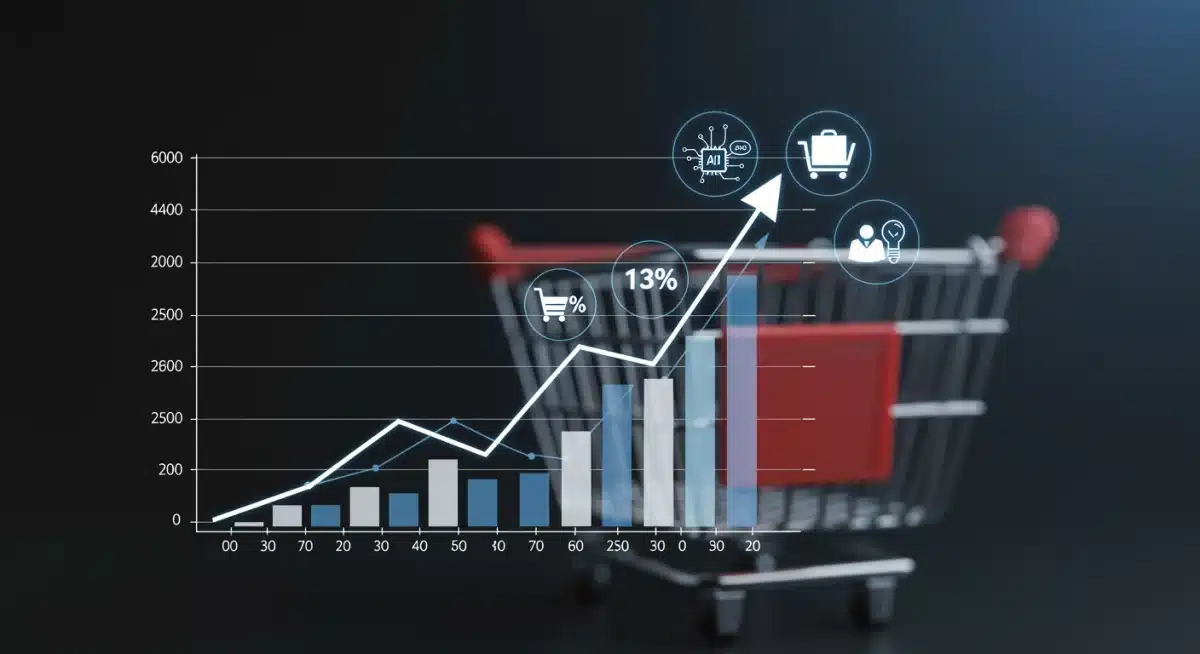
The mechanisms behind this uplift are multifaceted. When customers receive personalized recommendations, see relevant search results, and experience a tailored shopping journey, their satisfaction increases. Satisfied customers are more likely to return, make repeat purchases, and even become advocates for the brand. This positive feedback loop is amplified by AI’s ability to constantly refine its understanding of each customer.
Factors contributing to LTV growth
Several key factors contribute to the projected increase in customer lifetime value when AI personalization is effectively implemented:
- Increased Purchase Frequency: Relevant offers and timely reminders encourage more frequent transactions.
- Higher Average Order Value: AI-driven cross-sell and upsell recommendations lead customers to purchase more items or higher-priced products.
- Enhanced Customer Retention: Personalized experiences build loyalty, reducing churn and keeping customers engaged over longer periods.
- Improved Customer Satisfaction: A tailored shopping experience reduces friction and frustration, leading to happier customers.
The 13% uplift is not just a theoretical number; it’s a reflection of real-world business outcomes. Companies that effectively leverage AI for personalization are seeing tangible results in their bottom line. This makes the investment in platforms like Salesforce Commerce Cloud a strategic imperative for businesses aiming for sustainable growth.
In conclusion, the projected 13% uplift in US customer lifetime value by 2025 highlights the transformative potential of Salesforce Commerce Cloud’s AI personalization. It signifies a future where intelligent engagement is directly linked to enhanced profitability and enduring customer relationships.
Implementing AI personalization: best practices for retailers
Achieving the projected 13% uplift in customer lifetime value through AI personalization requires more than simply activating features. Retailers must adopt strategic best practices to maximize the effectiveness of Salesforce Commerce Cloud’s AI capabilities. A thoughtful implementation strategy ensures that AI tools are used to their full potential, delivering genuine value to both the customer and the business.
The journey to effective AI personalization involves a continuous cycle of data collection, analysis, experimentation, and refinement. It’s about understanding your audience deeply and using technology to respond to their evolving needs in a dynamic and intelligent way. This strategic approach ensures that personalization efforts are impactful and scalable.
Strategic implementation considerations
Successful AI personalization goes beyond technical setup; it demands a clear vision and a commitment to data-driven decision-making. Retailers should focus on several key areas to optimize their personalization initiatives.
- Data Quality and Integration: Ensure clean, comprehensive data across all customer touchpoints to feed accurate insights to AI.
- Define Clear Objectives: Set measurable goals for personalization efforts, such as increasing conversion rates or reducing cart abandonment.
- Start Small, Scale Up: Begin with specific use cases and iterate based on performance before expanding across the entire customer journey.
- A/B Testing and Experimentation: Continuously test different personalization strategies to identify what resonates best with your audience.
Moreover, it’s crucial to maintain a customer-centric mindset throughout the implementation process. Personalization should always aim to enhance the customer experience, not just push products. Transparency regarding data usage and providing customers with control over their preferences can also build trust and foster deeper engagement.
Training internal teams on the capabilities of AI tools and how to interpret the insights they generate is another vital aspect. Empowering employees to understand and leverage AI will ensure that the technology is fully integrated into the daily operations and strategic planning of the business.
Ultimately, successful AI personalization within Salesforce Commerce Cloud is about combining powerful technology with thoughtful strategy and continuous optimization. By adhering to best practices, retailers can unlock the full potential of AI to drive significant LTV growth.
Measuring success: KPIs beyond LTV
While customer lifetime value (LTV) is a crucial metric for evaluating the success of AI personalization, a comprehensive understanding requires looking at a broader range of key performance indicators (KPIs). Focusing solely on LTV might obscure other valuable insights into customer behavior and the overall effectiveness of personalization strategies. A holistic measurement approach ensures that retailers can fine-tune their tactics and continuously improve their digital commerce efforts.
These additional KPIs provide a more granular view of how AI personalization impacts different stages of the customer journey, from initial engagement to post-purchase loyalty. By tracking a diverse set of metrics, businesses can gain a clearer picture of their return on investment and identify areas for further optimization within Salesforce Commerce Cloud.
Key metrics for assessing personalization impact
Beyond LTV, several other metrics offer valuable insights into the performance of AI personalization. These KPIs can help retailers understand the immediate and long-term effects of their strategies.
- Conversion Rate: Measures the percentage of visitors who complete a desired action, such as making a purchase.
- Average Order Value (AOV): Indicates the average amount spent per customer transaction, often boosted by personalized recommendations.
- Bounce Rate: Shows the percentage of visitors who leave a site after viewing only one page, often reduced by relevant content.
- Customer Retention Rate: Tracks the percentage of customers who continue to purchase from a brand over time.
- Customer Satisfaction (CSAT) Scores: Gauges customer happiness with the shopping experience, often improved by personalization.
- Time on Site/Pages Per Session: Reflects engagement levels, which tend to increase with more relevant content.
Analyzing these KPIs in conjunction with LTV provides a robust framework for assessing the true impact of Salesforce Commerce Cloud’s AI personalization. For instance, an increase in AOV alongside a stable conversion rate indicates successful upsell and cross-sell efforts, while a lower bounce rate suggests that initial page content is highly relevant to the visitor.
Furthermore, segmenting these metrics by customer groups or personalization strategies can reveal deeper insights, allowing retailers to optimize campaigns for specific audiences. Regular reporting and analysis of these diverse KPIs are essential for continuous improvement and for maximizing the benefits of AI-driven personalization.
In summary, while LTV remains a paramount measure, a broader suite of KPIs offers a more complete and actionable view of the success of AI personalization initiatives within Salesforce Commerce Cloud.
The future of retail: sustained growth through intelligent engagement
The projected 13% uplift in US customer lifetime value by 2025 is just one indicator of a larger trend: the future of retail is inextricably linked to intelligent engagement. As technology continues to advance, the ability to understand, predict, and respond to individual customer needs in real-time will define market leaders. Salesforce Commerce Cloud’s AI personalization is not merely a tool but a foundational element for sustained growth in this evolving landscape.
The expectation among consumers for highly personalized experiences is growing, making generic interactions increasingly obsolete. Retailers who fail to adapt risk losing market share to more agile, AI-powered competitors. The investment in platforms that offer advanced personalization capabilities is, therefore, an investment in future relevance and profitability.
Preparing for the next wave of AI in retail
Looking beyond 2025, the capabilities of AI in retail are expected to expand even further. Retailers should already be thinking about how to leverage emerging AI trends to maintain a competitive edge.
- Generative AI for Content Creation: Automating product descriptions, marketing copy, and even personalized email campaigns.
- Voice Commerce Optimization: Adapting personalization for conversational interfaces and voice assistants.
- Hyper-personalized Store Experiences: Integrating online and offline data to create seamless, personalized journeys in physical stores.
- Ethical AI and Trust: Ensuring transparency and responsible use of customer data to build trust and avoid backlash.
The continuous evolution of AI means that retailers must adopt a mindset of perpetual learning and adaptation. Staying informed about new developments and being willing to experiment with innovative applications of AI will be critical. Platforms like Salesforce Commerce Cloud are designed to evolve, offering new features and integrations that allow businesses to remain at the cutting edge.
Moreover, the emphasis on data privacy and ethical AI will only grow. Brands that prioritize these aspects will build stronger customer trust, which is a key component of long-term customer lifetime value. Intelligent engagement, therefore, extends beyond just technology to encompass responsible and transparent business practices.
In conclusion, the future of retail is characterized by sustained growth driven by intelligent, AI-powered engagement. Salesforce Commerce Cloud’s personalization capabilities are paving the way for businesses to not only meet but exceed customer expectations, securing their place in a competitive market.
| Key Aspect | Brief Description |
|---|---|
| AI-Driven Personalization | Leveraging Salesforce Einstein AI to deliver highly individualized shopping experiences for customers. |
| 13% LTV Uplift | Projected increase in US customer lifetime value by 2025 due to enhanced AI personalization. |
| Key AI Features | Einstein Product Recommendations, Search Recommendations, Predictive Sort, and Commerce Insights. |
| Strategic Implementation | Best practices include data quality, clear objectives, A/B testing, and continuous optimization. |
Frequently asked questions about AI personalization
Salesforce Commerce Cloud’s AI personalization leverages Einstein AI to deliver tailored shopping experiences. It analyzes customer data to provide relevant product recommendations, optimized search results, and dynamic content, enhancing engagement across the entire e-commerce journey.
AI personalization increases LTV by boosting purchase frequency, average order value, and customer retention. By creating more relevant and satisfying experiences, customers are more likely to return, spend more, and remain loyal to the brand over time.
Key features include Einstein Product Recommendations, which suggest relevant items; Einstein Search Recommendations, for improved search results; Einstein Predictive Sort, for dynamic page ordering; and Einstein Commerce Insights, for valuable analytics on customer behavior and product performance.
Effective implementation involves ensuring high data quality, setting clear objectives, starting with focused use cases, and continuously A/B testing and optimizing strategies. A customer-centric approach that builds trust is also crucial for long-term success.
A 13% LTV uplift signifies substantial growth in customer profitability and brand loyalty. For US retailers, it means a stronger competitive advantage, improved return on marketing investments, and a more sustainable business model in the increasingly competitive digital commerce landscape.
Conclusion
The journey towards achieving a 13% uplift in US customer lifetime value by 2025 through Salesforce Commerce Cloud’s AI personalization is a clear testament to the transformative power of intelligent technology in retail. By embracing advanced AI capabilities, businesses can move beyond generic interactions, crafting bespoke shopping experiences that resonate deeply with individual customers. This strategic shift not only enhances customer satisfaction and loyalty but also drives measurable financial growth, positioning retailers for sustained success in the dynamic world of e-commerce. The future of retail is undoubtedly personalized, data-driven, and intelligently engaging, with Salesforce Commerce Cloud leading the charge.